
2023
Ux/Ui
Special Olympics



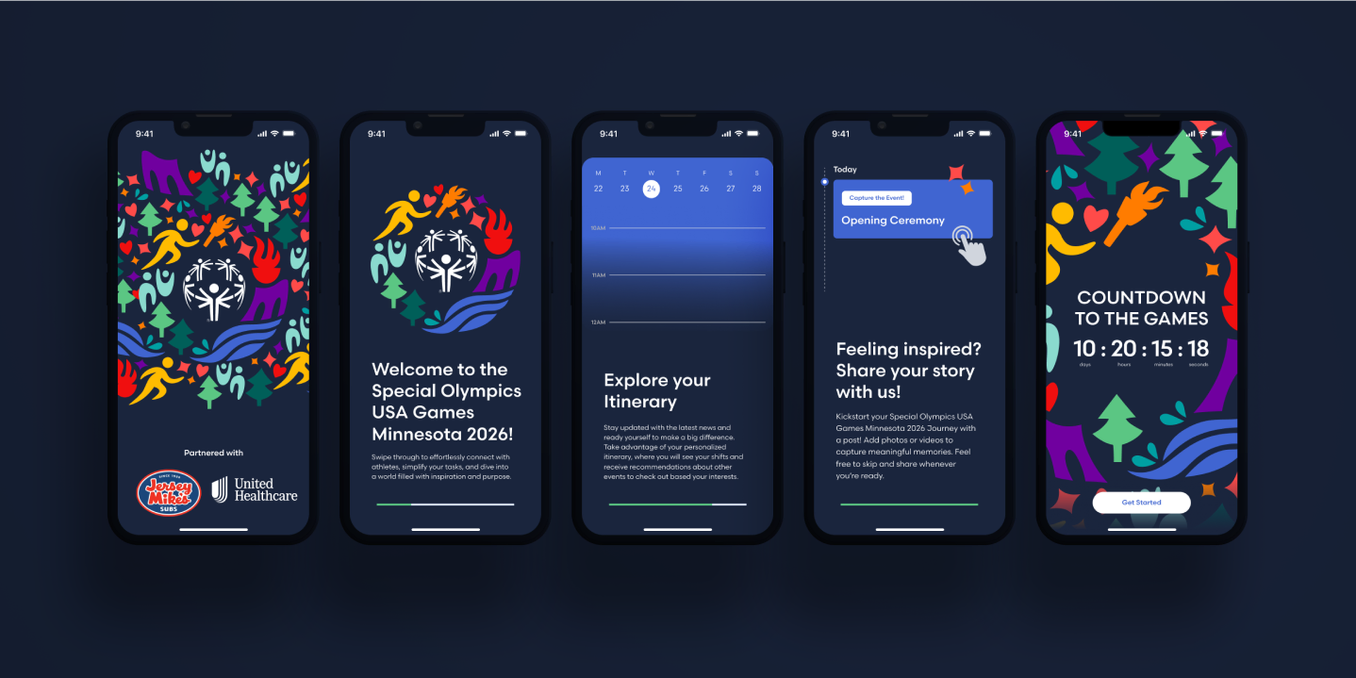
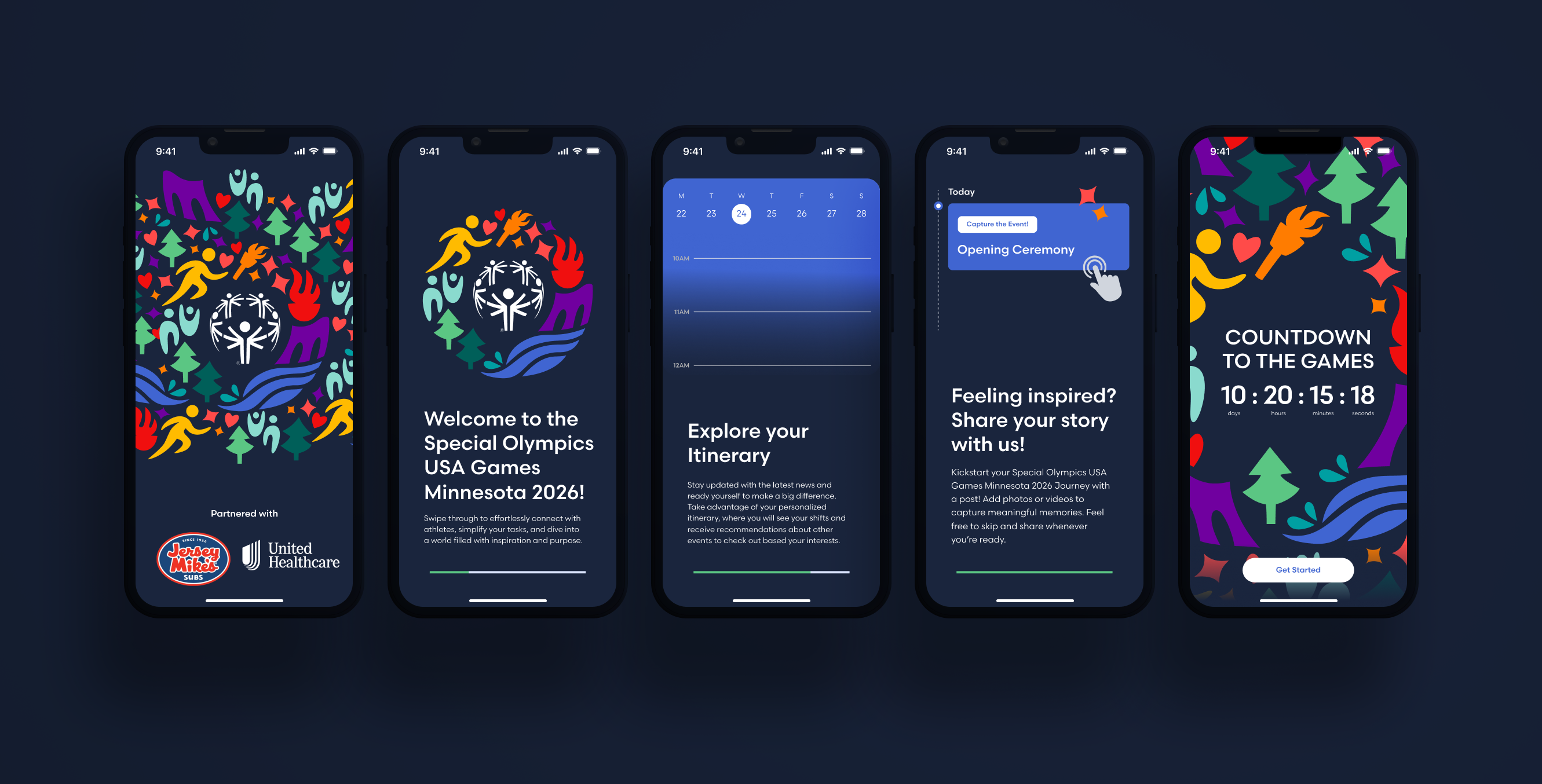
As a pro-bono project by Accenture for Special Olympics USA, our team designed a conceptual prototype for the 2026 app.
Special Olympics USA sought help in delivering a world-class digital experience for the 2026 USA Games. We translated our initial research and visioning workshop outputs into a high-level product backlog and roadmap, working to bring these concepts to life through a conceptual prototype. In parallel, we further validated the technical architecture to determine the reusability of the 2022 app code base and assessed accessibility.
Team:
Jessica Petruzello (Project Lead), Gabriel Moya (Ux Ui Design), Maria Luisa Castro (Ux Ui Design), Moma Zuñiga (Design Research), James Cervone (Tech Architect), Lucia Ramirez (Design Oversight), Rachel Legree (Project Manager), Lauryn Beccari (Product Analyst)
With these specific goals in mind, we started our work with visioning sessions and interviews to map out our initial features:
+ Athlete-centered/driven
+ Health-focused with a goal of 12,000 health screenings
+ The most technologically advanced USA Games ever
+ Have a Legacy focus for everything that was done.
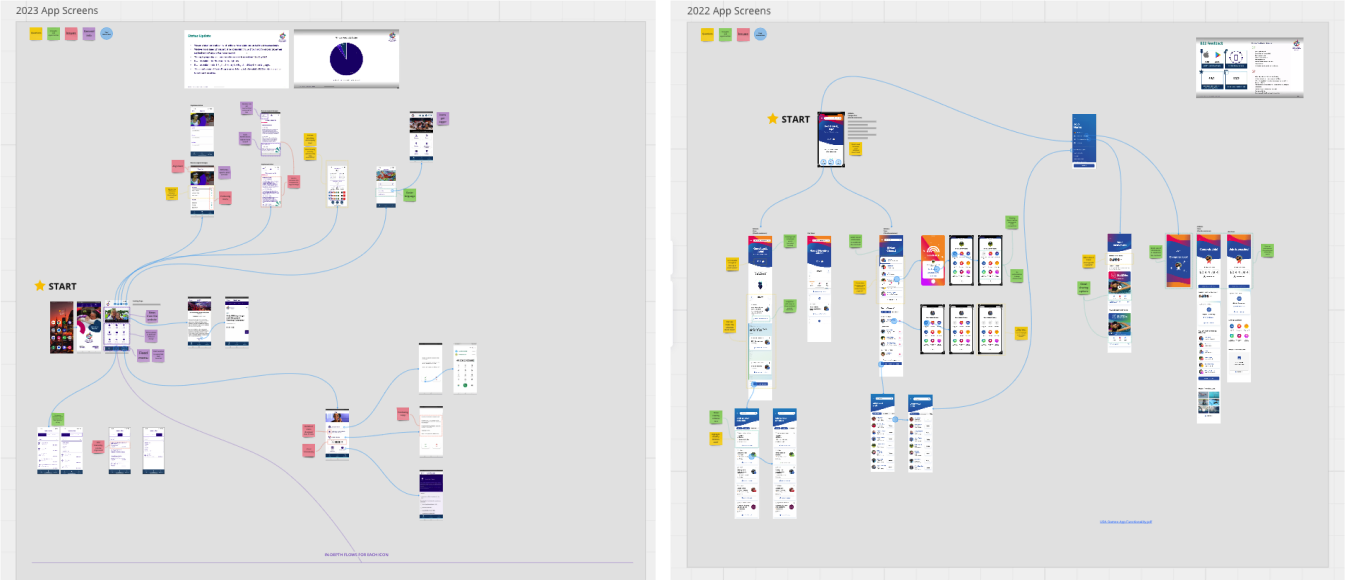
We began by reviewing existing documentation and Special Olympics research to identify possible user groups and new features. In developing this project for the Special Olympics, prioritizing accessibility was not just a consideration; it was a fundamental ethos that guided every step of the process. We recognized that individuals with diverse disabilities would be using our app, and we were dedicated to ensuring that it catered to their unique needs.
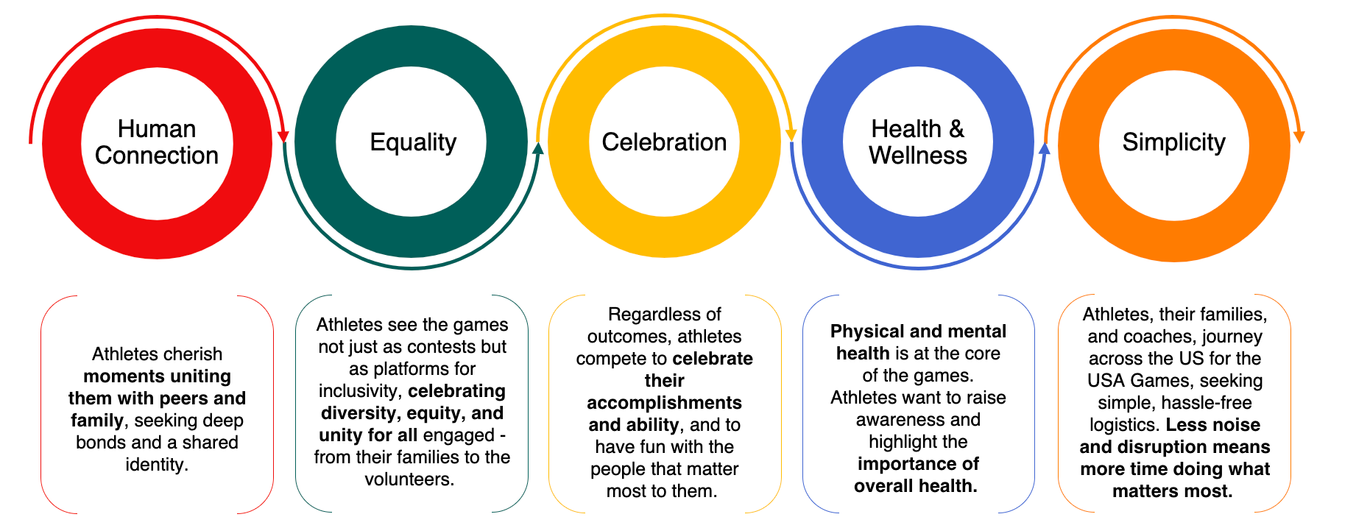
Experience Principles Defined through the visioning sessions, these experience principles are used to frame our understanding of stakeholder needs and how we can shape the experience for them.
To provide more clarity to the design process, we created a series of stakeholder profiles that ensure our solutions cater to real stakeholder needs and pain points. By utilizing stakeholder personas and stakeholder archetypes as frameworks to understand who we were creating for, we could make stakeholder-centric design decisions.
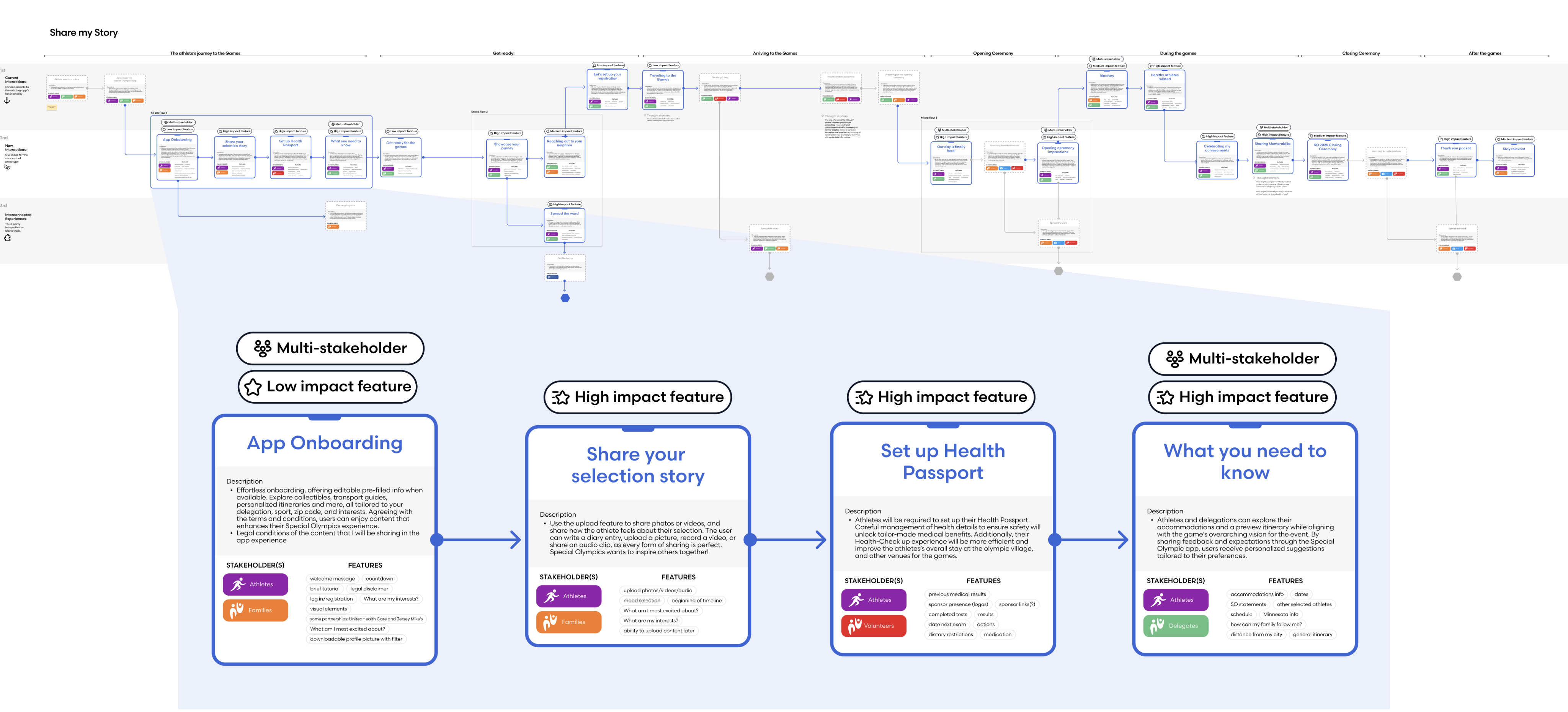
We then concluded this stage by proposing overarching potential features and stakeholder-specific features.
Experience Journey Map
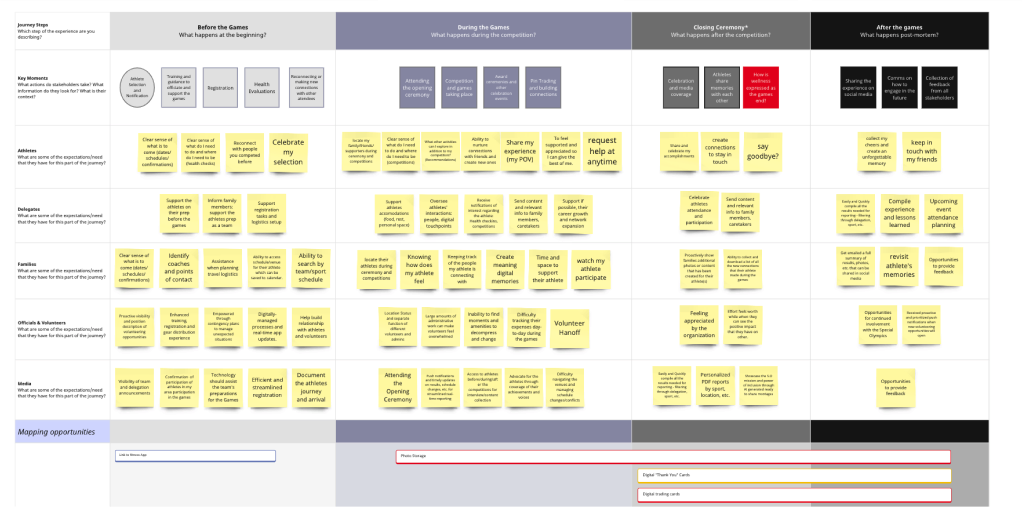
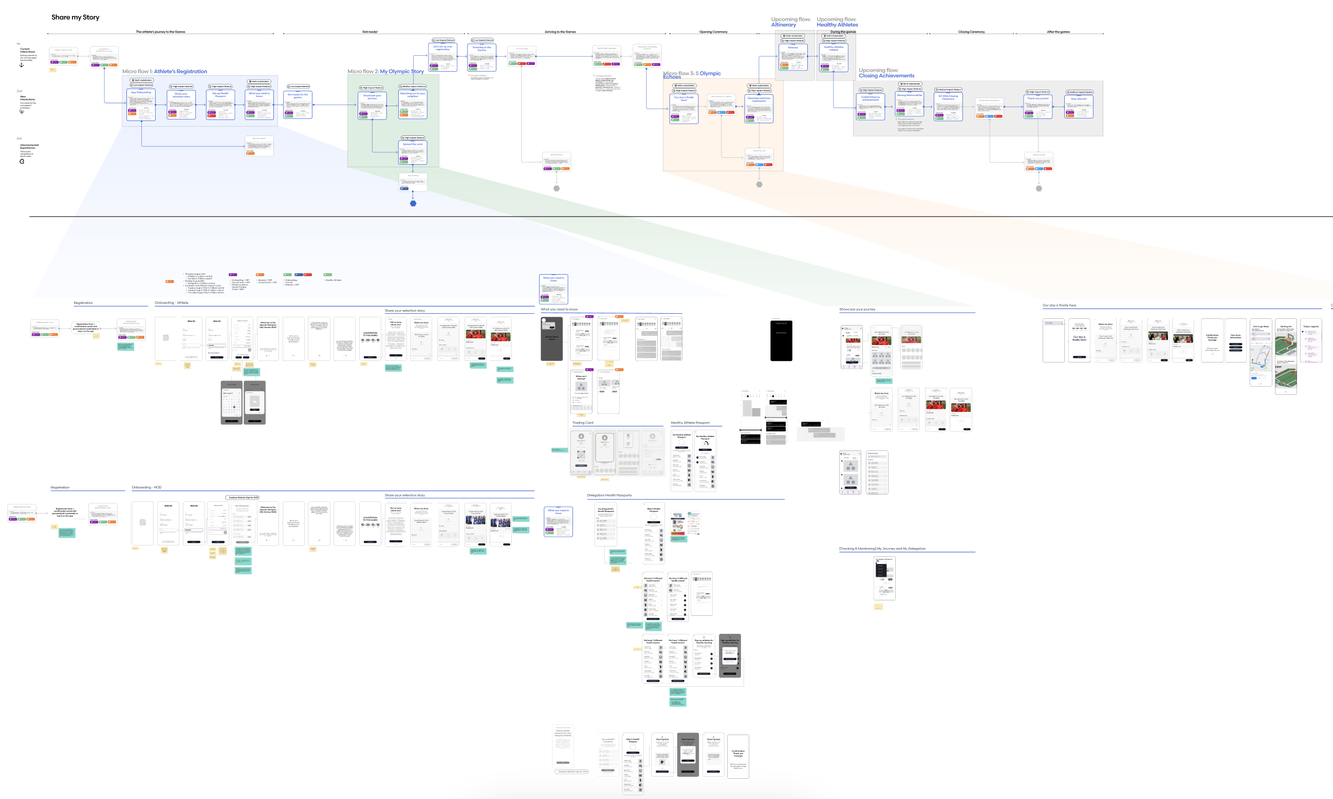
These features were then translated into the Athlete's Journey Map, visualizing the moments in the app itself so that the final prototype would tell that story in a cohesive way. Features that apply to multiple stakeholders were pointed out. See the journey map below.
Benchmarking
We researched other applications that resonated with the branding guidelines provided to define the visual language our application should have.We divided the journey map stages into microflows, which were translated into app features or sections. We then began creating lo-fi wireframes.
Initial Wireframes
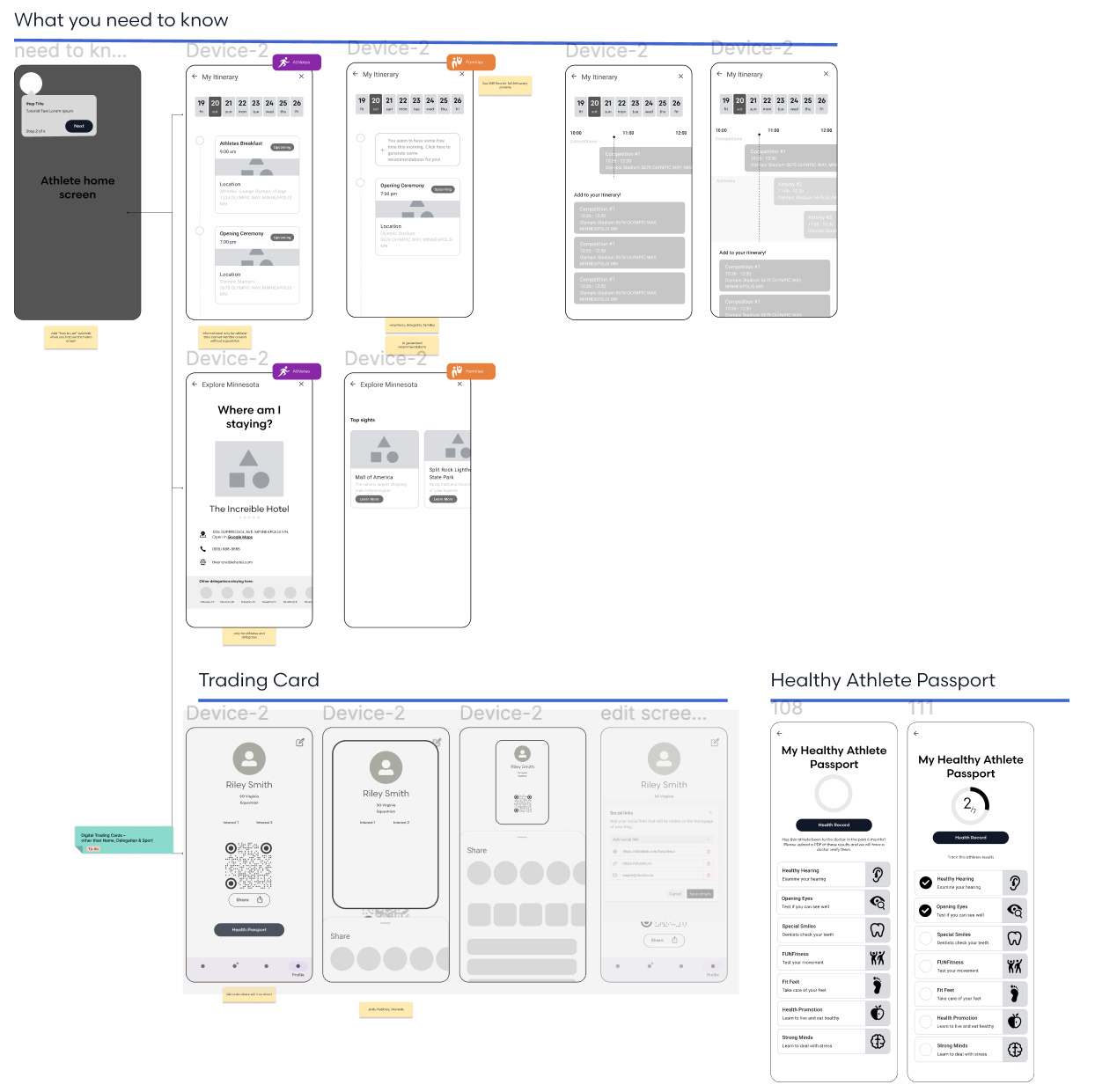
I worked on designing the UX and wireframes for the key screens in each of the microflows.
UI Phase
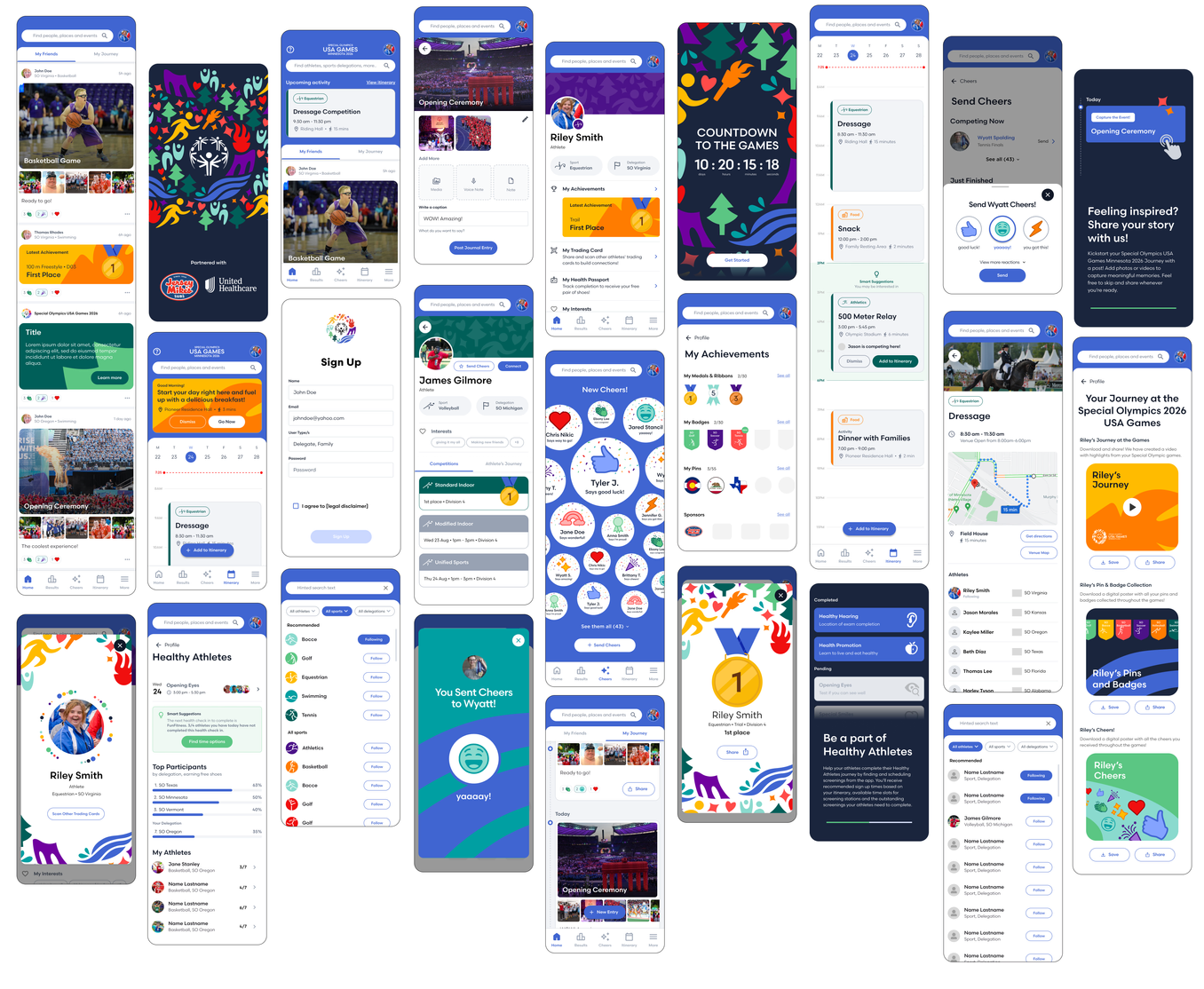
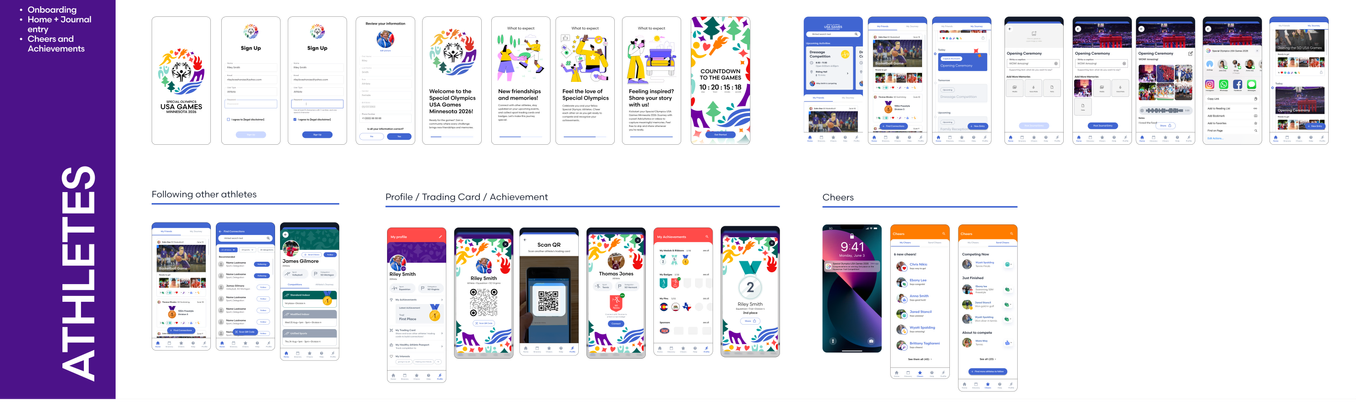
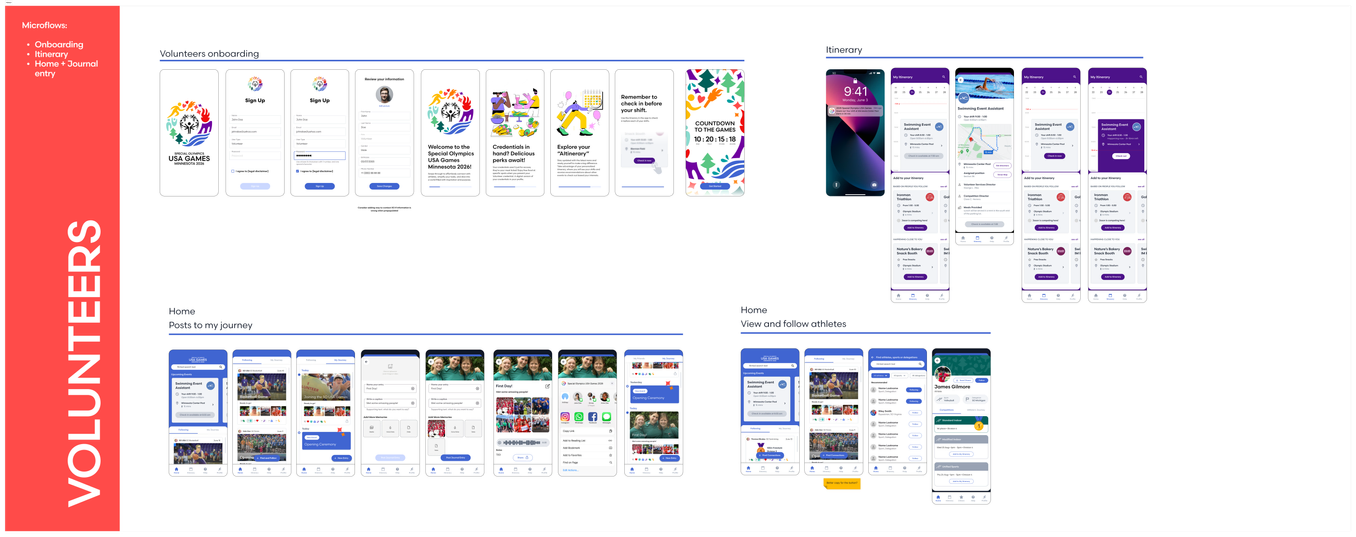
We designed specific flows for each of the five major stakeholder groups (athletes, delegates, families, officials, and volunteers) and prototyped conceptual screens for user testing.
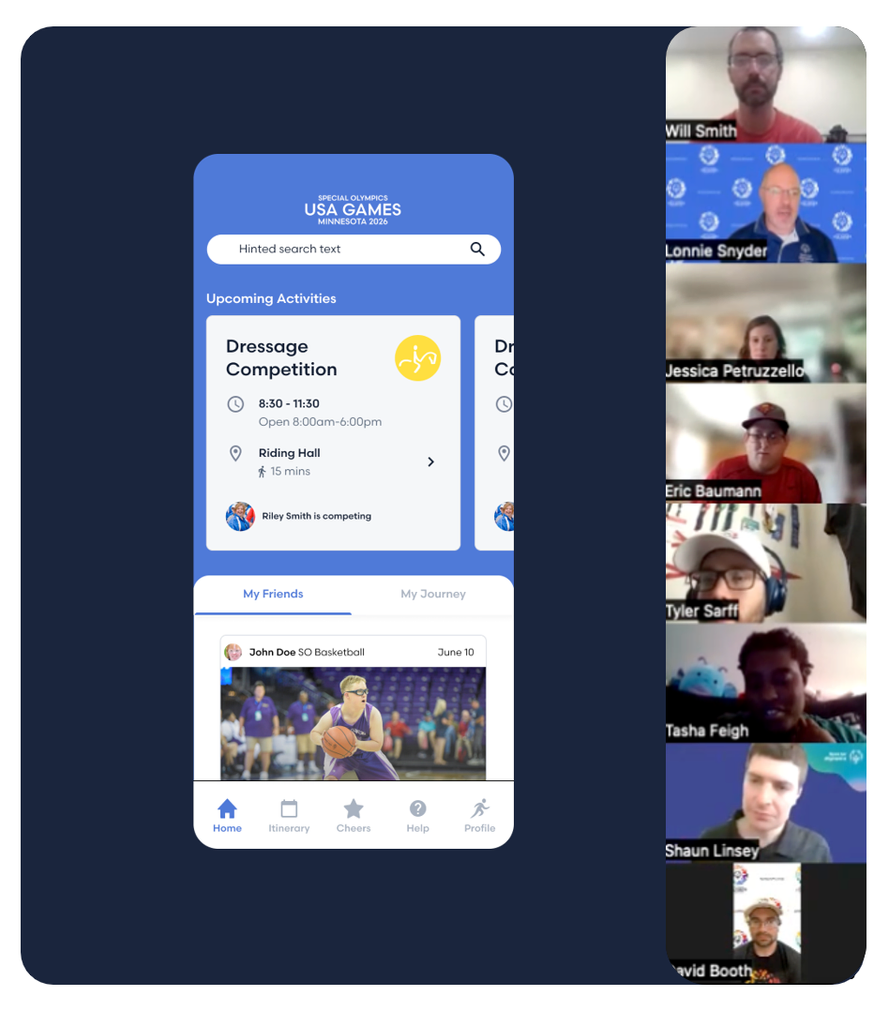
"What works best for them is what should work for us."
We conducted the Conceptual Prototype feedback sessions with athletes, families, delegates, volunteers and officials.
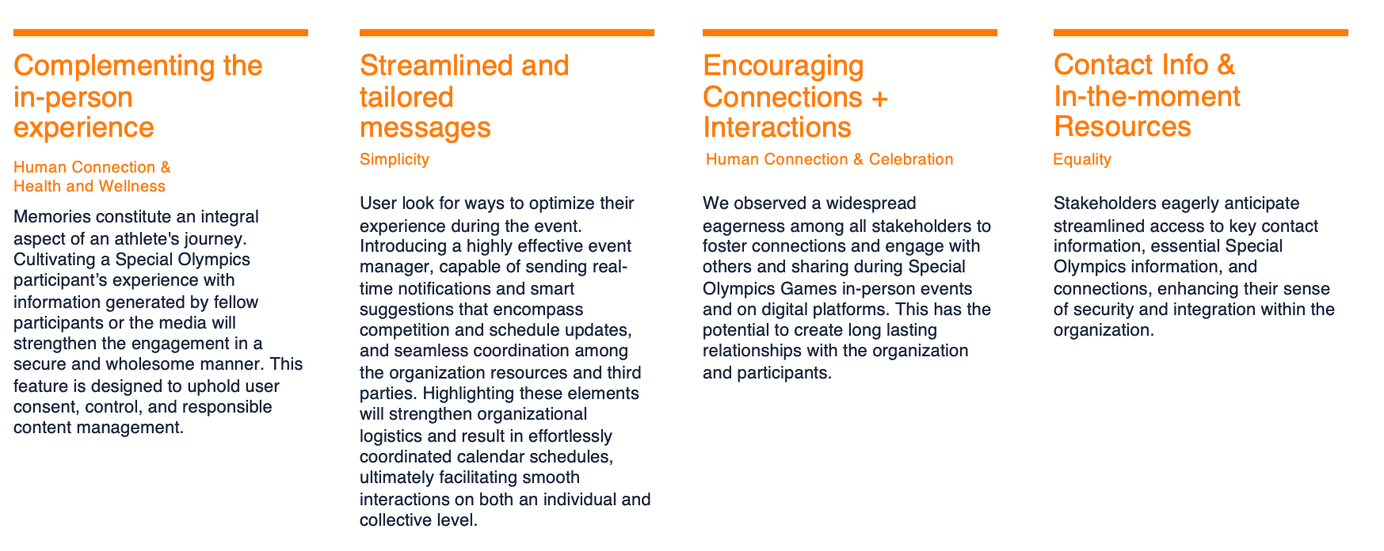
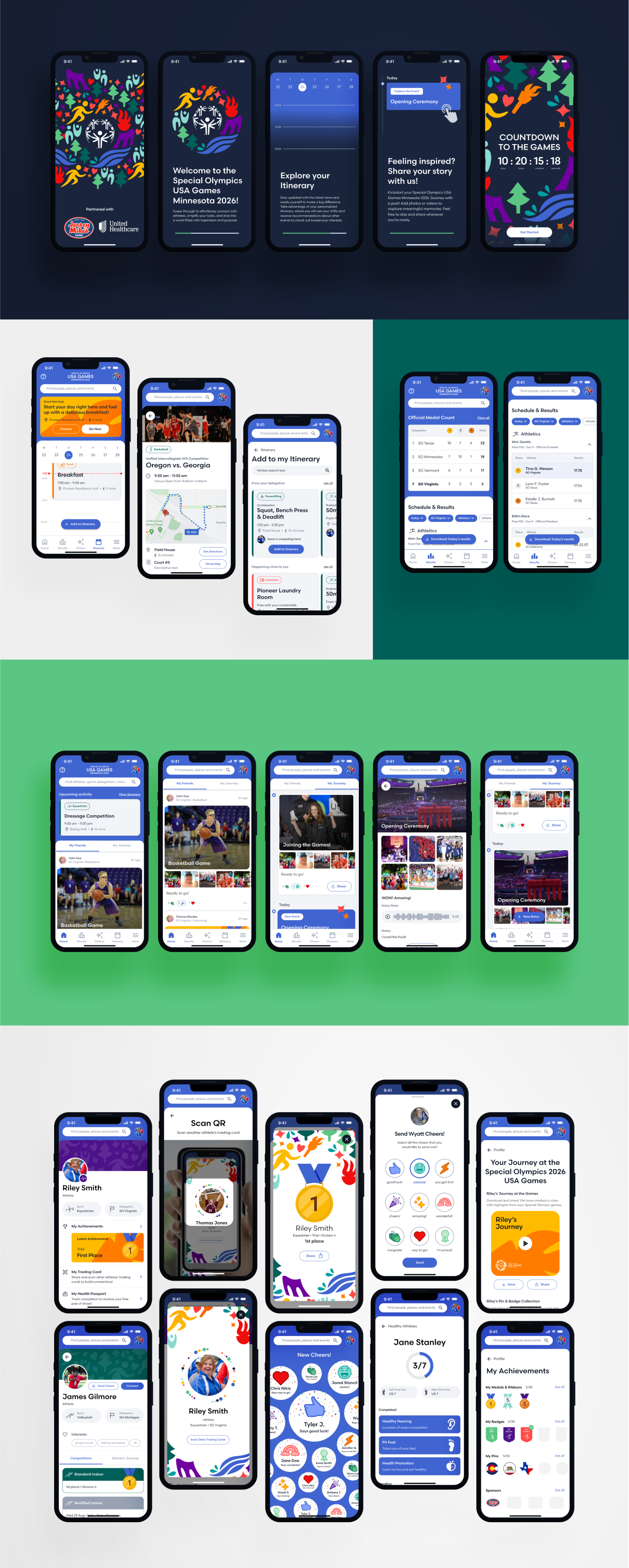
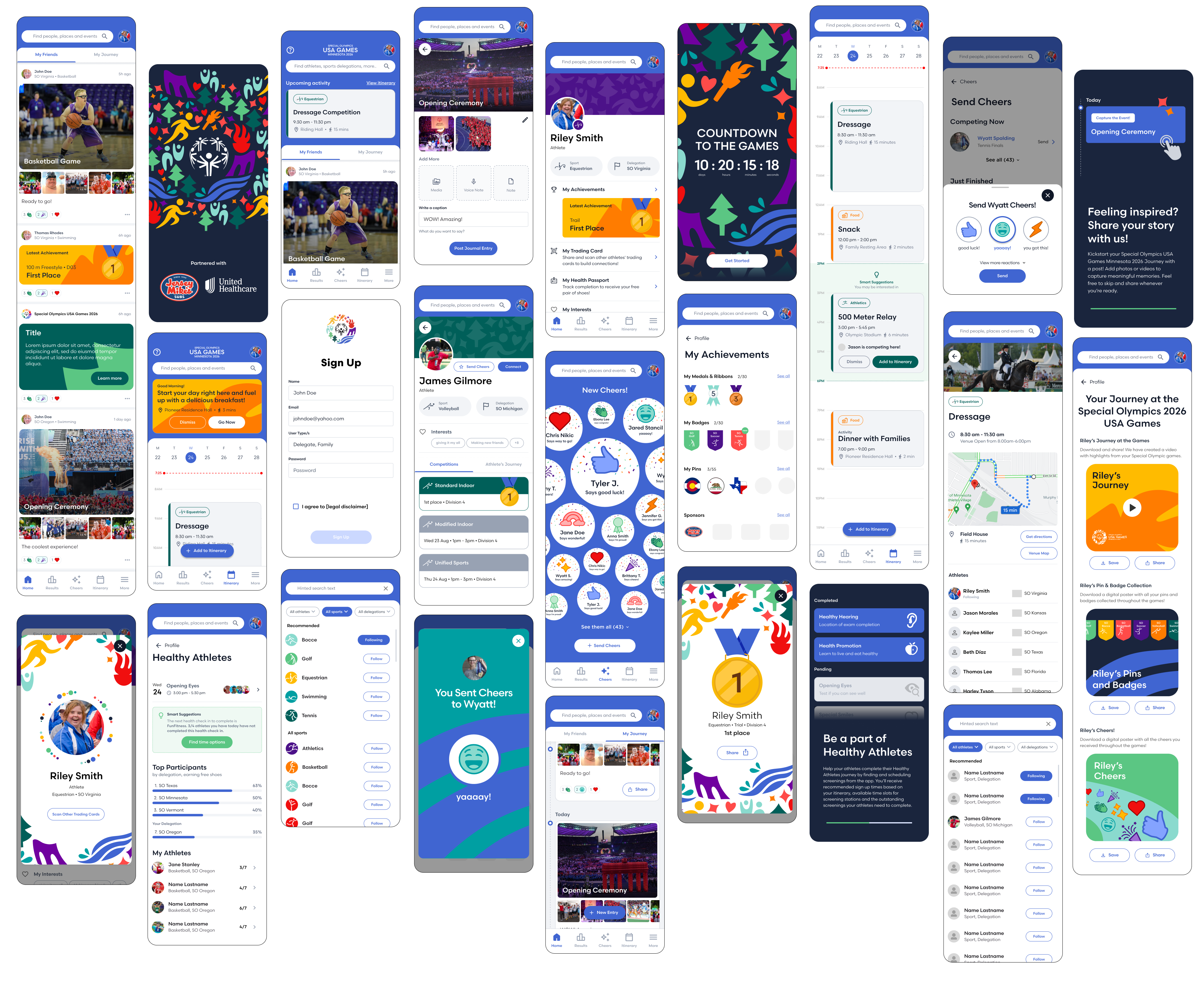
We synthesized the overall feedback received from the Big 5 stakeholder groups and the guiding principles:Once we finalized the testing phase, we implemented the feedback and delivered the final prototype, highlighting the main features and the athletes' journey throughout the games.In order to achieve the most accessible experience for all users, we recommend integrating either UserWay or AccessiBe as aids for the visually or hearing impaired, as well as those with cognitive disabilities.
2023
Ux/Ui
Special Olympics
As a pro-bono project by Accenture for Special Olympics USA, our team designed a conceptual prototype for the 2026 app.
Special Olympics USA sought help in delivering a world-class digital experience for the 2026 USA Games. We translated our initial research and visioning workshop outputs into a high-level product backlog and roadmap, working to bring these concepts to life through a conceptual prototype. In parallel, we further validated the technical architecture to determine the reusability of the 2022 app code base and assessed accessibility.
Team:
Jessica Petruzello (Project Lead), Gabriel Moya (Ux Ui Design), Maria Luisa Castro (Ux Ui Design), Moma Zuñiga (Design Research), James Cervone (Tech Architect), Lucia Ramirez (Design Oversight), Rachel Legree (Project Manager), Lauryn Beccari (Product Analyst)
With these specific goals in mind, we started our work with visioning sessions and interviews to map out our initial features:
+ Athlete-centered/driven
+ Health-focused with a goal of 12,000 health screenings
+ The most technologically advanced USA Games ever
+ Have a Legacy focus for everything that was done.
We began by reviewing existing documentation and Special Olympics research to identify possible user groups and new features. In developing this project for the Special Olympics, prioritizing accessibility was not just a consideration; it was a fundamental ethos that guided every step of the process. We recognized that individuals with diverse disabilities would be using our app, and we were dedicated to ensuring that it catered to their unique needs.
Experience Principles Defined through the visioning sessions, these experience principles are used to frame our understanding of stakeholder needs and how we can shape the experience for them.
To provide more clarity to the design process, we created a series of stakeholder profiles that ensure our solutions cater to real stakeholder needs and pain points. By utilizing stakeholder personas and stakeholder archetypes as frameworks to understand who we were creating for, we could make stakeholder-centric design decisions.
We then concluded this stage by proposing overarching potential features and stakeholder-specific features.
Experience Journey Map
These features were then translated into the Athlete's Journey Map, visualizing the moments in the app itself so that the final prototype would tell that story in a cohesive way. Features that apply to multiple stakeholders were pointed out. See the journey map below.
Benchmarking
We researched other applications that resonated with the branding guidelines provided to define the visual language our application should have.We divided the journey map stages into microflows, which were translated into app features or sections. We then began creating lo-fi wireframes.
Initial Wireframes
I worked on designing the UX and wireframes for the key screens in each of the microflows.
UI Phase
We designed specific flows for each of the five major stakeholder groups (athletes, delegates, families, officials, and volunteers) and prototyped conceptual screens for user testing.
"What works best for them is what should work for us."
We conducted the Conceptual Prototype feedback sessions with athletes, families, delegates, volunteers and officials.
We synthesized the overall feedback received from the Big 5 stakeholder groups and the guiding principles:Once we finalized the testing phase, we implemented the feedback and delivered the final prototype, highlighting the main features and the athletes' journey throughout the games.In order to achieve the most accessible experience for all users, we recommend integrating either UserWay or AccessiBe as aids for the visually or hearing impaired, as well as those with cognitive disabilities.
2023
Ux/Ui
Special Olympics
As a pro-bono project by Accenture for Special Olympics USA, our team designed a conceptual prototype for the 2026 app.
Special Olympics USA sought help in delivering a world-class digital experience for the 2026 USA Games. We translated our initial research and visioning workshop outputs into a high-level product backlog and roadmap, working to bring these concepts to life through a conceptual prototype. In parallel, we further validated the technical architecture to determine the reusability of the 2022 app code base and assessed accessibility.
Team:
Jessica Petruzello (Project Lead), Gabriel Moya (Ux Ui Design), Maria Luisa Castro (Ux Ui Design), Moma Zuñiga (Design Research), James Cervone (Tech Architect), Lucia Ramirez (Design Oversight), Rachel Legree (Project Manager), Lauryn Beccari (Product Analyst)
With these specific goals in mind, we started our work with visioning sessions and interviews to map out our initial features:
+ Athlete-centered/driven
+ Health-focused with a goal of 12,000 health screenings
+ The most technologically advanced USA Games ever
+ Have a Legacy focus for everything that was done.
We began by reviewing existing documentation and Special Olympics research to identify possible user groups and new features. In developing this project for the Special Olympics, prioritizing accessibility was not just a consideration; it was a fundamental ethos that guided every step of the process. We recognized that individuals with diverse disabilities would be using our app, and we were dedicated to ensuring that it catered to their unique needs.
Experience Principles Defined through the visioning sessions, these experience principles are used to frame our understanding of stakeholder needs and how we can shape the experience for them.
To provide more clarity to the design process, we created a series of stakeholder profiles that ensure our solutions cater to real stakeholder needs and pain points. By utilizing stakeholder personas and stakeholder archetypes as frameworks to understand who we were creating for, we could make stakeholder-centric design decisions.
We then concluded this stage by proposing overarching potential features and stakeholder-specific features.
Experience Journey Map
These features were then translated into the Athlete's Journey Map, visualizing the moments in the app itself so that the final prototype would tell that story in a cohesive way. Features that apply to multiple stakeholders were pointed out. See the journey map below.
Benchmarking
We researched other applications that resonated with the branding guidelines provided to define the visual language our application should have.We divided the journey map stages into microflows, which were translated into app features or sections. We then began creating lo-fi wireframes.
Initial Wireframes
I worked on designing the UX and wireframes for the key screens in each of the microflows.
UI Phase
We designed specific flows for each of the five major stakeholder groups (athletes, delegates, families, officials, and volunteers) and prototyped conceptual screens for user testing.
"What works best for them is what should work for us."
We conducted the Conceptual Prototype feedback sessions with athletes, families, delegates, volunteers and officials.
We synthesized the overall feedback received from the Big 5 stakeholder groups and the guiding principles:Once we finalized the testing phase, we implemented the feedback and delivered the final prototype, highlighting the main features and the athletes' journey throughout the games.In order to achieve the most accessible experience for all users, we recommend integrating either UserWay or AccessiBe as aids for the visually or hearing impaired, as well as those with cognitive disabilities.