
2023
Ux/Ui
Tastebud
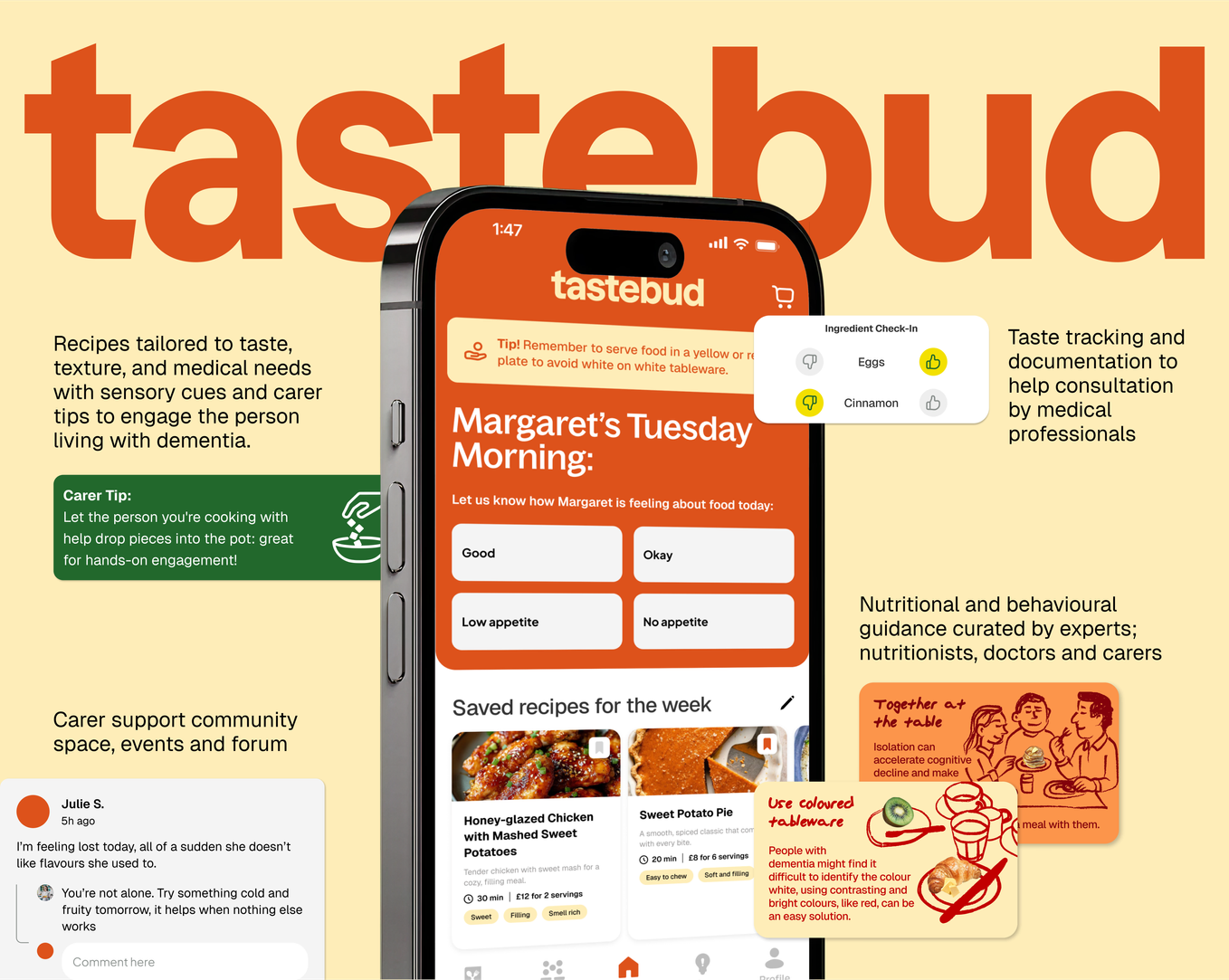
Built with and for carers, Tastebud reframes food not just as nutrition, but as a way to preserve dignity, connection, and comfort; one meal at a time.
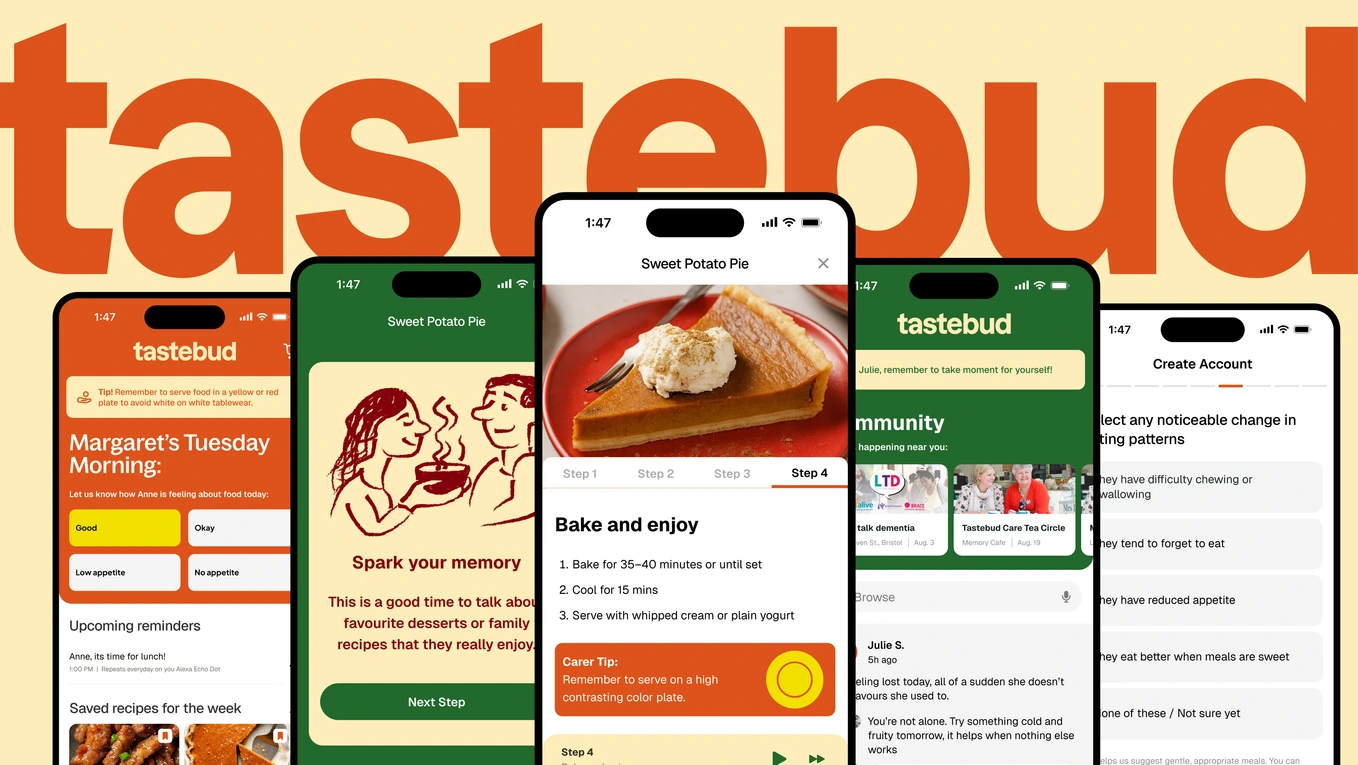
Tastebud is a service platform designed to support informal dementia carers through practical, personalised nutrition guidance by combining expert-backed recommendations with tools that make mealtime easier and more joyful. From tailored recipe suggestions and behavioural tips to digital health tracking and grocery integrations, the platform bridges clinical knowledge and daily care.
Team:
Desiree D'Souza, Natalia Zolyniak, Maria Luisa Castro
MA Service Design, Royal College of Art
My role: As part of a multidisciplinary team, I led the experience design, research synthesis, and storytelling. I also developed dementia-friendly UI mockups and worked closely with carers to translate their knowledge into accessible, emotional designs.



Context:
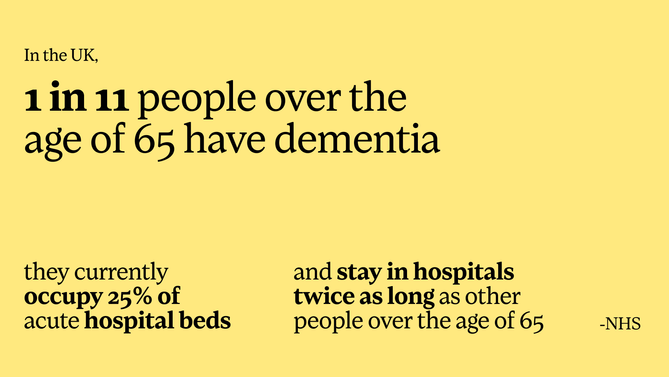
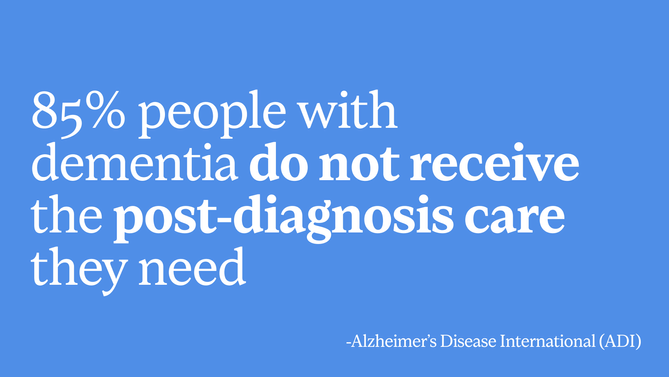
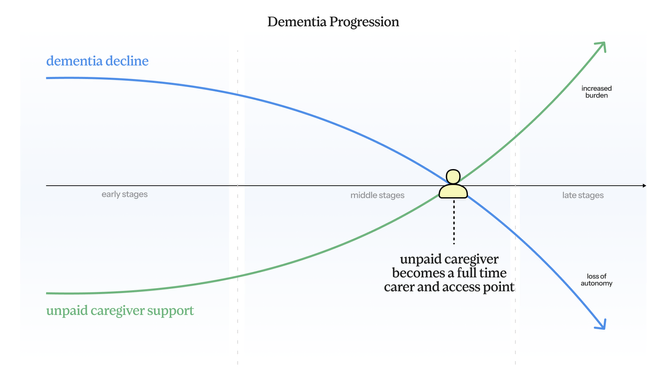
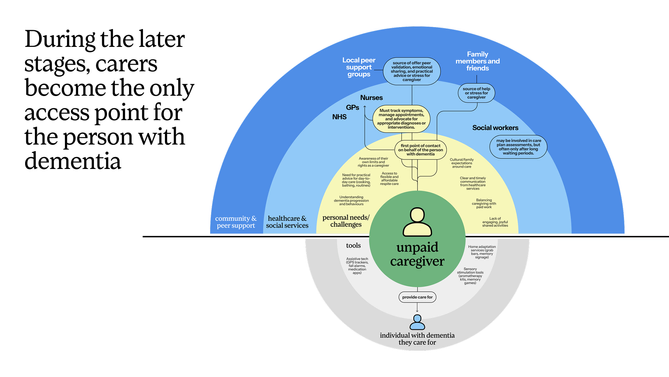
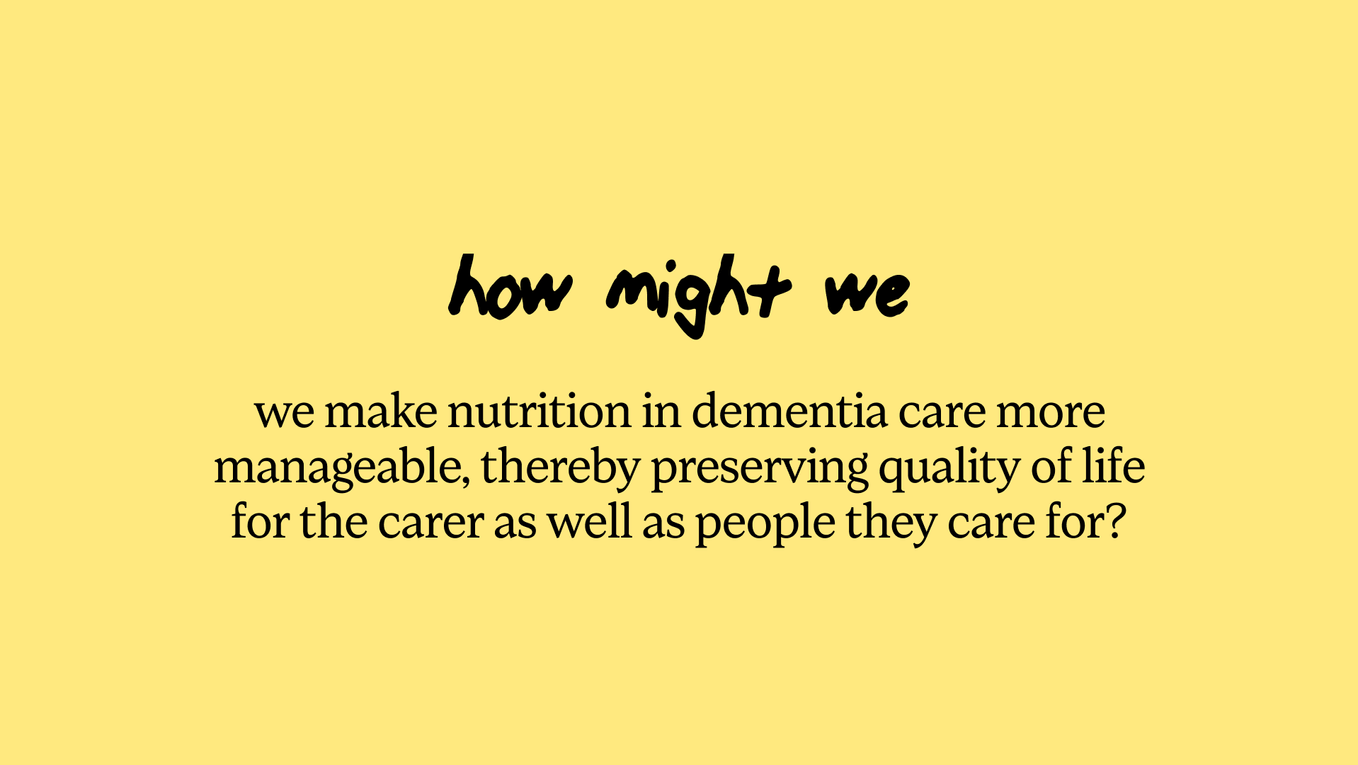
While dementia is widely associated with memory loss, few recognise that it also alters taste, smell, and appetite. These sensory changes can lead to silent yet serious consequences like malnutrition, dehydration, or even Type 2 diabetes. Despite this, nutrition is almost never addressed in dementia care plans, and carers are left without guidance. Informal carers (often family members) do their best, but lack support. Through interviews and field research, we learned that food isn't just fuel. For someone with dementia, it’s also emotional, cultural, and deeply personal. We saw the strain on carers trying to make the "right" choices while preserving joy at the table.
2023
Ux/Ui
Tastebud
Built with and for carers, Tastebud reframes food not just as nutrition, but as a way to preserve dignity, connection, and comfort; one meal at a time.
Tastebud is a service platform designed to support informal dementia carers through practical, personalised nutrition guidance by combining expert-backed recommendations with tools that make mealtime easier and more joyful. From tailored recipe suggestions and behavioural tips to digital health tracking and grocery integrations, the platform bridges clinical knowledge and daily care.
Team:
Desiree D'Souza, Natalia Zolyniak, Maria Luisa Castro
MA Service Design, Royal College of Art
My role: As part of a multidisciplinary team, I led the experience design, research synthesis, and storytelling. I also developed dementia-friendly UI mockups and worked closely with carers to translate their knowledge into accessible, emotional designs.
Context:
While dementia is widely associated with memory loss, few recognise that it also alters taste, smell, and appetite. These sensory changes can lead to silent yet serious consequences like malnutrition, dehydration, or even Type 2 diabetes. Despite this, nutrition is almost never addressed in dementia care plans, and carers are left without guidance. Informal carers (often family members) do their best, but lack support. Through interviews and field research, we learned that food isn't just fuel. For someone with dementia, it’s also emotional, cultural, and deeply personal. We saw the strain on carers trying to make the "right" choices while preserving joy at the table.
2025
Ux/Ui & Service Design
Tastebud
Built with and for carers, Tastebud reframes food not just as nutrition, but as a way to preserve dignity, connection, and comfort; one meal at a time.
Tastebud is a service platform designed to support informal dementia carers through practical, personalised nutrition guidance by combining expert-backed recommendations with tools that make mealtime easier and more joyful. From tailored recipe suggestions and behavioural tips to digital health tracking and grocery integrations, the platform bridges clinical knowledge and daily care.
Team:
Desiree D'Souza, Natalia Zolyniak, Maria Luisa Castro
MA Service Design, Royal College of Art
My role: As part of a multidisciplinary team, I led the experience design, research synthesis, and storytelling. I also developed dementia-friendly UI mockups and worked closely with carers to translate their knowledge into accessible, emotional designs.
Context:
While dementia is widely associated with memory loss, few recognise that it also alters taste, smell, and appetite. These sensory changes can lead to silent yet serious consequences like malnutrition, dehydration, or even Type 2 diabetes. Despite this, nutrition is almost never addressed in dementia care plans, and carers are left without guidance. Informal carers (often family members) do their best, but lack support. Through interviews and field research, we learned that food isn't just fuel. For someone with dementia, it’s also emotional, cultural, and deeply personal. We saw the strain on carers trying to make the "right" choices while preserving joy at the table.